 AI Affiliate
Paperpal Affiliate Program for Academic Writing and Research Audiences
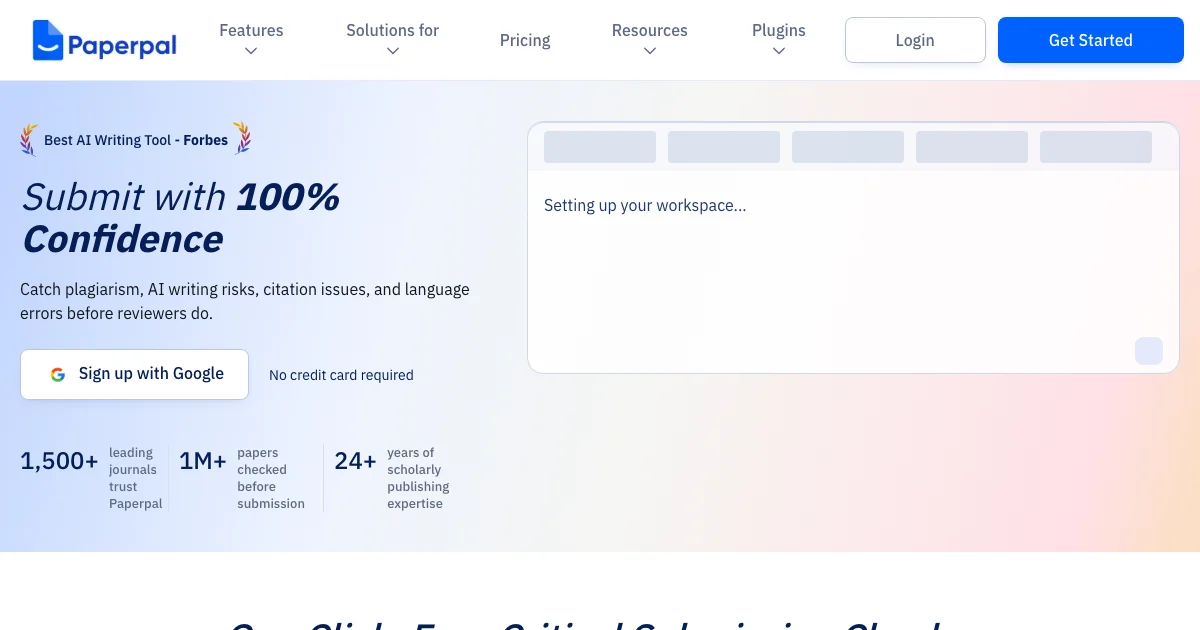
Paperpal is an AI academic writing platform for language editing, paraphrasing, research discovery, citations, PDF chat, translation, plagiarism checks, and submission readiness.
Stay updated on Paperpal
Get an email only when the official affiliate page changes.
Monitor my affiliate linkPricing & Commission
💡 We may earn a commission if you join. No extra cost to you.
Why Promote Paperpal?
Paperpal fits academic-writing, research, student, and scholarly-communication audiences because affiliates can demonstrate a complete source-to-submission workflow. The current product page links Paperpal across web, Word, Google Docs, Chrome, and Overleaf, with tools for academic writing, paraphrasing, translation, PDF chat, summarization, reference discovery, citations, grammar, proofreading, reference checking, and submission readiness.
A useful review can draft one evidence-heavy section, locate and insert references, revise language in context, then run final checks while showing which suggestions need human acceptance or rejection. This keeps the recommendation grounded in observable editing and research work rather than promising publication, grades, or acceptance.
Paperpal's current affiliate page and linked official guidebook are specific about the program. Affiliates receive a flat 30% one-time, non-recurring commission on qualifying Paperpal Prime purchases and a 60-day cookie.
The guidebook publishes a $50 minimum payment threshold, PayPal and Payoneer, a 31-day hold, calculation on the first of each month, and processing on the fifteenth for eligible commissions. Current rules also prohibit branded-keyword PPC and restrict misleading trademark use and unauthorized coupon aggregation.
Affiliates should use the current program guide's $50 threshold and settlement schedule when planning payout timing rather than infer missing operational details from older summaries.
Pros & Cons for Affiliates
Pros
- Paperpal's current affiliate page publishes a flat 30% non-recurring commission and a 60-day cookie window.
- The official guidebook publishes a $50 minimum, PayPal and Payoneer, a 31-day hold, and monthly calculation and processing dates.
- Writing, research, citation, PDF, language, and submission-check tools support a detailed academic workflow rather than a single-feature review.
Cons
- The commission is one-time rather than recurring on future subscription payments.
- Current rules prohibit branded-keyword PPC and place restrictions on misleading trademark use and unauthorized coupon aggregation.
Who Should Promote This?
Academic-writing educators, research communities, student and postgraduate publishers, scholarly communication creators, citation-workflow reviewers, and university-focused software audiences.
The strongest content drafts one sourced section, checks references and language changes, and runs final readiness checks while showing where the researcher still makes the decision.
How to Promote Paperpal
Best content types
- Academic writing workflow walkthrough
- Research writing assistant comparison
- Draft-to-submission checklist test
Recommended angle
Take one evidence-heavy paragraph from source discovery through citation, revision, language checks, and final readiness review, showing which AI suggestions are accepted, rejected, or corrected.
Conversion tips
- State the 30% as one-time and non-recurring, then include the 60-day cookie and $50 threshold so readers do not mistake the offer for recurring revenue.
- Avoid branded-keyword PPC and present Paperpal as a writing and research aid rather than a guarantee of grades, publication, or acceptance.
Paperpal AI Alternatives
Discover AI tools alternative to Paperpal


